

Persona 4 has been called, for good reason, the best JRPG ever made. The gameplay is top notch, the characters are some of the best in video games and the story is a lot of fun. Any accolades it gets, it deserves, and one of the things that gets talked about a lot as an example for being good is the Social Link system, which was an expansion over the previous game’s version of the same system. The Social Link isn’t just great for Persona, either, it’s one of the best examples of roleplaying and conversation systems in RPGs, and it’s a shame more games don’t actually utilize it, or something similar to it.
Most of the time, during a Game Anatomy, I talk about how the system worked well, or made, the game it comes from, and we’ll do that here, but the thing about Social Links is that they’re an outgrowth of something of a problem within RPGs, Japanese and Western, and that’s character interaction and roleplaying. RPGs are not, and cannot be, table top roleplaying games, and as such, it means the interactions between characters within the narrative is going to be a lot different from how it would be done in a table top game, even if RPGs are attempts at replicating or emulating that experience (in various ways, each which change depending on the game). Most games have the player make a decision and maybe it will connect with a karma meter or a personal connection meter with a party member. It’s good, but it’s not great, and in a lot of games (read: everything from Bioware) it’s more of a side thing than something that’s full integrated into the system. Mass Effect’s dialogue wheel is great, but it’s a limited form of interaction for both the player and the game. I can use it to make sure the Iron Bull or Tali fall in love with me, or get slightly different reactions from characters, but that’s it. It has only a limited impact on the game. The Social Links aren’t like that. They’re directly integrated into the whole experience of the game, and while it may not completely alter scenes, that’s not what’s important about the Social Links. They alter the gameplay, tie the narrative to the gameplay, and work together with both of these thematically, but before we talk about that, we need to talk about Yu.
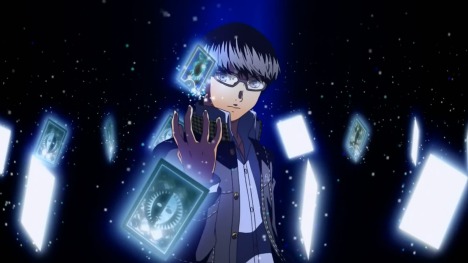
Image Copyright Atlus and Anime International Company Inc.
That’s Yu Narukami, the protagonist of Persona 4 and all around good guy. Sure, he’s a silent protagonist who mostly serves as a cipher for the player to hang out with a bunch of cool people and fight demons, but Yu actually manages to have some character. He’s a man with heart and courage, and I don’t mean that in the generic hero meaning, I mean this guy is a better candidate for the Heart ring than Ma-Ti is. Yu genuinely cares about people, and (if you play him right), isn’t going to mince words or screw around with them, either, because sometimes, people need to know the real, unvarnished truth, because that’s what the game is about.
The way the game does this is through Social Links, which is a multi-level system where, after a certain number of conversations with a character, Yu grows closer to them. When Yu hits a milestone in their relationship, that Social Link grows. This does include dating, and it means the closer you are with a party member, the better you work together in combat (You became friends with Yosuke. Yosuke will now die for you) and it sounds a lot like how Dragon Age does it, but it’s not. It’s better.
The first reason it’s better is that it’s not about buttering up someone with gifts or agreeing with them until they’re your best friend. See, Persona 4 isn’t about that kind of bullshit. It’s about the truth, and sometimes, Yu needs to tell something they need to hear, whether they want to hear it or not (and a lot of times they don’t). The major theme of this game is that humanity has darkness inside of them, and everyone, no matter who you are, as some sort of darkness festering inside them and it cannot be conquered. No one is ever going to get rid of that darkness inside them, because that darkness is them. It’s the part of them they don’t like, they don’t want to hear and don’t want to recognize is a part of them, but no one is going to be a stronger person if they don’t recognize that’s a part of who they are. In Persona 4, Yu becomes friends with people by helping them confront the darkness within them and accepting who they are. He does this by listening to them, then saying what they need to hear. They don’t always like this. Sometimes it straight up pisses them off, but they recognize it’s right and that you’re not trying to hurt them, and they come around.
Here’s the thing, though, Social Links are not automatic. The player needs to make Yu say the right thing, and the player can screw it up. This means the player also needs to be caring and attentive, just like Yu (or they can use a guide, but most of them really aren’t hard to figure out). The player is directly responsible for making sure that Yu does the smart thing, and the Link will not advance if the player doesn’t give them what they need. It’s not a binary pass/fail, either. It’s a spectrum. Yeah, there’s an optimal path, but one wrong response won’t ruin a friendship, and it makes the relationship feel that much more nuanced and organic. As a player and as a character, Yu must guide his friends and family through real conversations to get to know them, and help them confront who they really are.
The second reason it’s better than Dragon Age, or anything else in RPGs (except maybe Witcher III, but Witcher III isn’t as well written as this. This is not a complaint against Witcher III) is because it’s directly tied into the game’s narrative. The game puts the player on a time limit: there’s a year of game time, and each day, the player only has a limited number of things they can do, and this includes going to fight monsters and save people. One of the big issues with a lot of other RPGs is that the PCs relationship with the rest of the party is sort of separate. It’s completely optional, and leads to optional quests, and while it’s less pronounced in some games (Mass Effect 2), it’s completely obvious in others (Dragon Age: Origins and Inquisition). Outside of a few comments from some characters, it’s completely divorced from the rest of the game, but in Persona 4, becoming friends with people IS the whole game. Each Social Link is its own story line, and while technically optional, each of these storylines converge with the main narrative. They don’t just connect thematically, they connect with the overall narrative too, and not just party members, Dojima and Nanako, although for them, the connection is a lot more direct. Each PC (after Yosuke and Chie) have their own dungeons, and bosses that are their darker natures. Their Social Links, which are established AFTER you defeat their Shadow selves, are about coming to terms with that darkness and how they relate to the group and the overall mystery. Sure, maybe the sports guys or the drama club girl (I’ve never actually joined band club in this game) may not tie directly into the mystery, but they help Yu grow as a person and further his character development. They, also, of course, tie in thematically, but we’ve covered that.
From there, though, there’s even more to it. The story takes this and integrates it into the game. The PCs are powered by extra planar monsters that give them magic and super powers, allowing them to fight and save people in the game’s dungeons. Yu has the extra special ability to change out these monsters, called Personas, and can build new ones. He’s limited, however, in his ability to craft new ones by his level and his Social Link score. See, each monster has its own Arcana, relating to Tarot cards. Yosuke is the Magician, Dojima is the Hierophant and Rise’s is the Lovers, and different Personas correspond with the different Arcanas. The stronger your bond with a person of that Arcana, the stronger Personas of that Arcana you can make, and the stronger your Personas of that Arcana are. Yu is literally as strong as his friendships.
There’s more to this, and since Persona 4 is one of those games I keep attempting and never seem to beat, there’s more that even I don’t know about. Still, it’s the best way to do interactions with the various characters in the games. It needs to be a direct integration, both with gameplay and the actual story. If the player misses out, it’s their fault for not being friends with the other people.
Filed under: Game Anatomy, Video Games | Tagged: Dragon Age, JRPGS, Mass Effect, Persona 4, Roleplaying Games, RPGs, Video Games | 1 Comment »
 Cluttered Mind